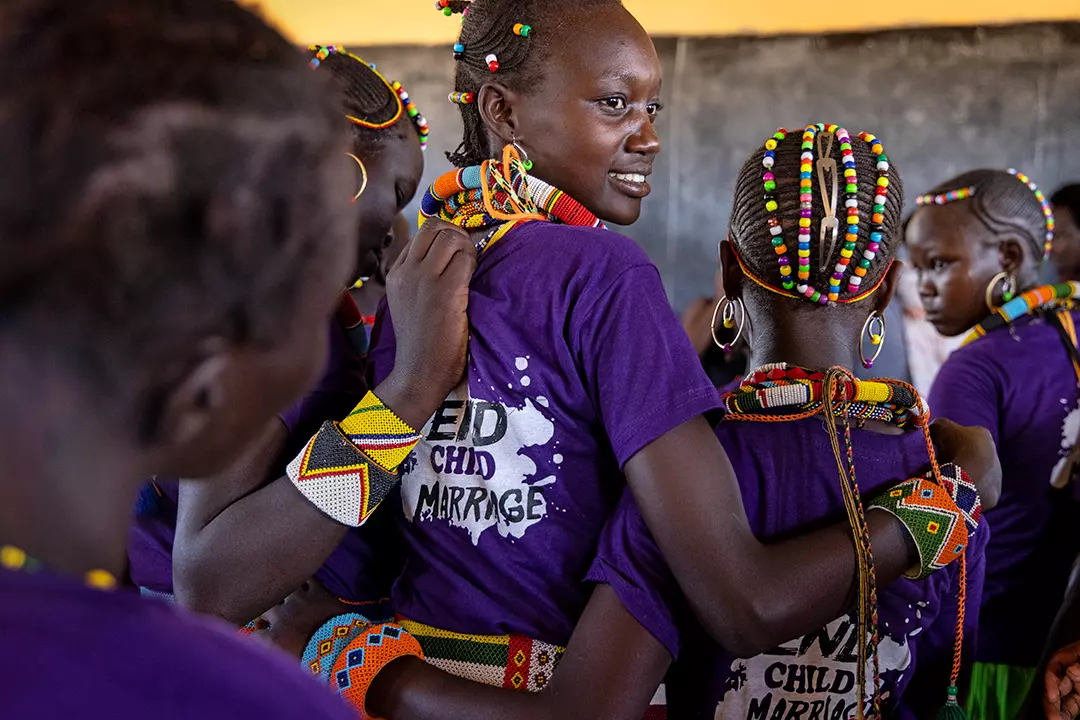
Veronica, 14, celebrates the opening of TYTW's Shepherd School with her classmates. "I am happy for the education given to us. I am so happy." Photo by Stephanie Sinclair.
Too Young to Wed has worked alongside girls and communities in Kenya since 2014. In Samburu County, roughly one in three girls marries before 18, while more than 75% of girls undergo FGM. The two practices are closely linked, and the effects of climate change are making life harder for families and increasing the risks girls face. Repeated droughts can destroy livestock, food supplies and household income, leaving families with fewer ways to cope and increasing the pressure on girls to marry.
Our work in Kenya starts with that reality. We work alongside girls, families and communities to prevent child marriage, FGM and other forms of harm. We help girls stay safe and in school, support families when economic hardship puts girls at greater risk, and work with local organisations and institutions to strengthen protection for girls.
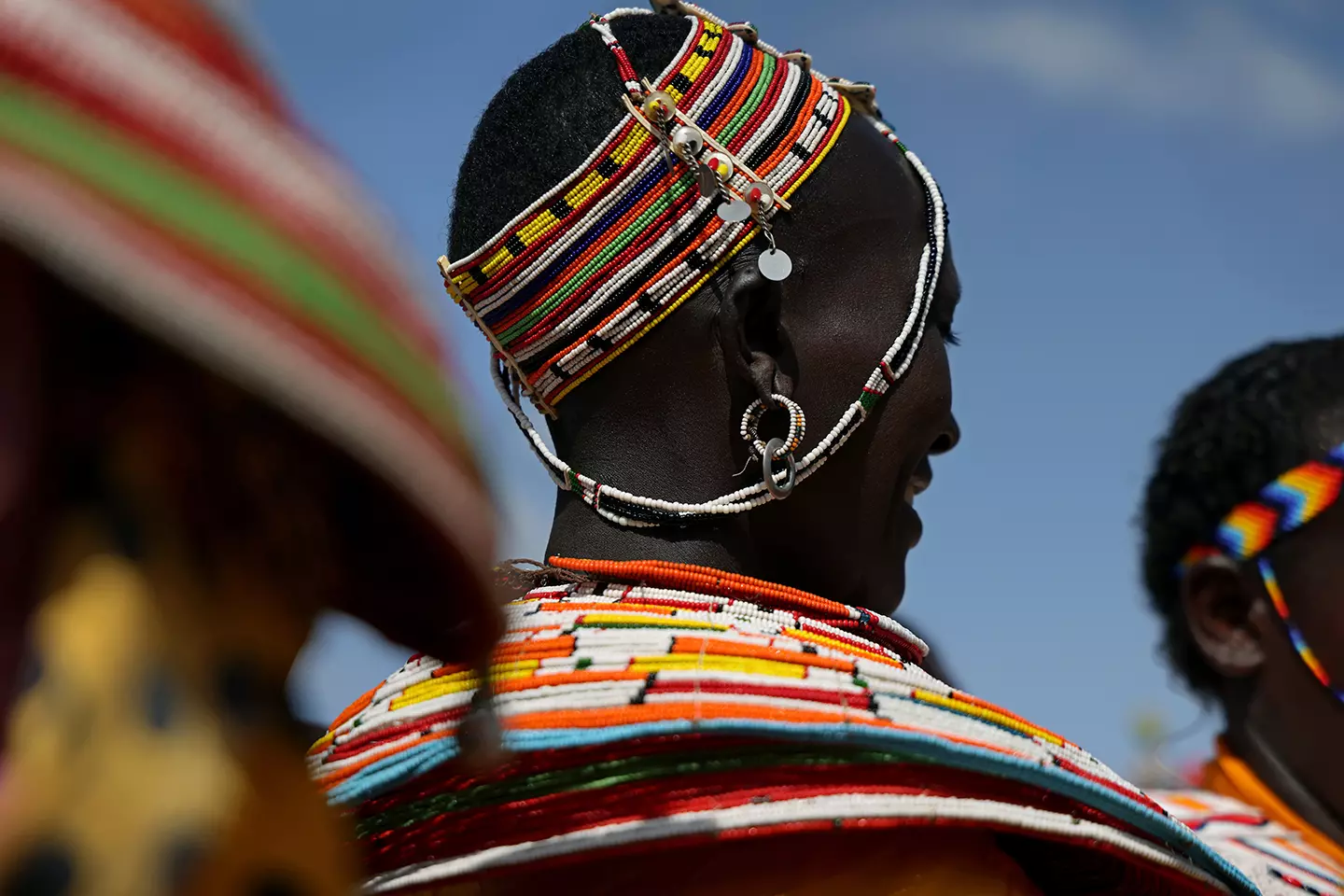

A young Samburu woman in Ngilai village joins a celebratory ceremony in support of the Butterfly Project. Photo by Stephanie Sinclair.
For more than a decade, TYTW has built relationships with girls, families and communities in Samburu. Our work has included education, mentoring, family engagement, livelihoods, emergency protection and scholarships for girls at risk of or affected by child marriage.
From 2022 to 2025, the Sampiripiri Butterfly Programme worked with shepherd girls aged 6 to 17 whose lives had traditionally revolved around herding livestock rather than attending school. The programme created a path into formal education while giving girls access to life skills, reproductive health education and financial literacy.
Over its two-year cycle, 109 girls took part in shepherd classes, with retention above 96%. Of the girls who moved into mainstream schools, 99% remained in school. The work also helped change attitudes around girls' education. Parents who had previously been reluctant to send their daughters to school began enrolling them, while local institutions began investing in the education pathways the programme had helped establish.
The programme has now completed its two-year cycle. What remains is the knowledge, relationships and local partnerships built through that work, along with a clearer understanding of what it takes to keep girls connected to education and protected from practices that can change the course of their lives.
Being alongside girls means responding when something threatens their safety, education or future.
TYTW provides direct support when girls face child marriage, violence or other serious risks, while also working with local organisations that are protecting girls from child marriage, FGM and other harmful practices.
In Samburu, repeated drought can mean the loss of livestock, food and household income. When families are already struggling to meet basic needs, girls can face greater pressure to leave school, take on more household responsibilities or marry. What looks like an economic crisis for a household can quickly become a protection crisis for a girl.
In response, TYTW has supported families with water and food during periods of drought, while helping women strengthen small businesses and poultry-based livelihoods. In 2025, this included 100,000 litres of water and food assistance to 260 households.
This is part of what it means to work alongside girls rather than addressing child marriage in isolation. It means understanding the circumstances around a girl and responding to what can put her at risk.
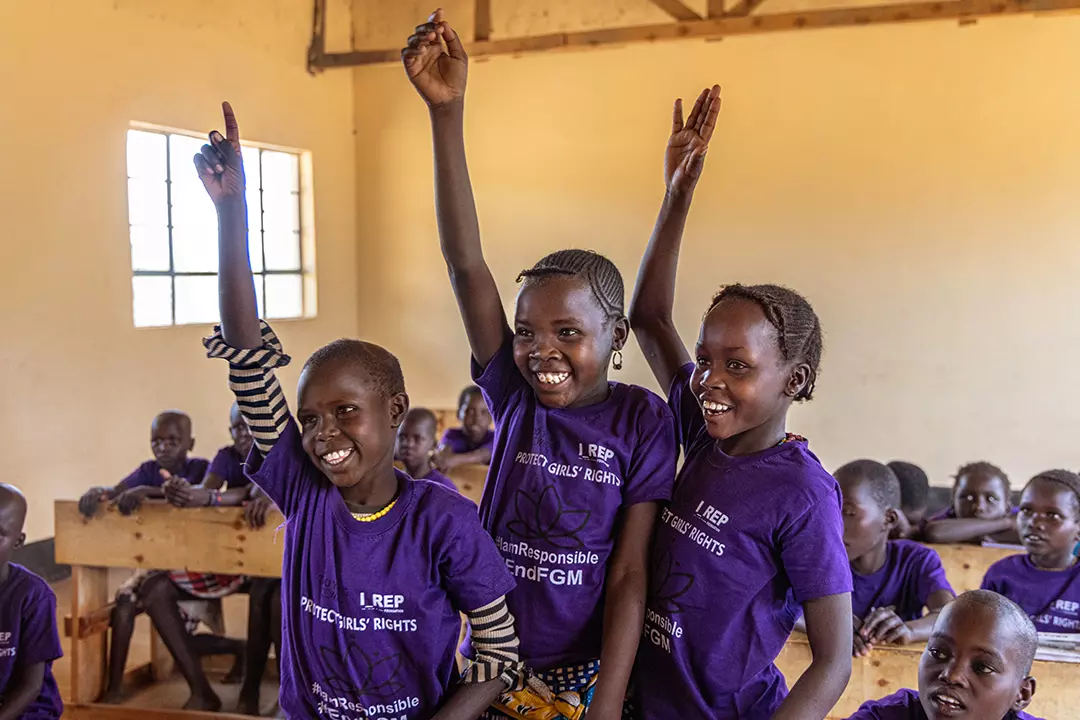
TYTW's work in Kenya is rooted in relationships with girls and families, as well as with local organisations, schools, community leaders and public institutions.
That has allowed us to respond to the different circumstances that shape girls' lives, from access to education and economic security to harmful practices, safety and support. It has also allowed us to learn from what girls and communities tell us about what is and is not working.
After more than a decade in Kenya, we know that lasting change is built locally, through trust, persistence and partnerships with people who will keep standing alongside girls over time.