Too Young to Wed's mission is to stand alongside girls, ensuring their voices lead the way in transforming the systems and conditions that place them at risk of child marriage, violence, and exploitation. We work so girls—regardless of geography, crisis, fragility, or political context—can grow up safe, educated, and able to shape their own futures.
We envision a world free from child marriage where:
Every girl can grow up protected from harm, empowered to learn, thrive and lead with
dignity - and where communities and systems work together to make that her reality
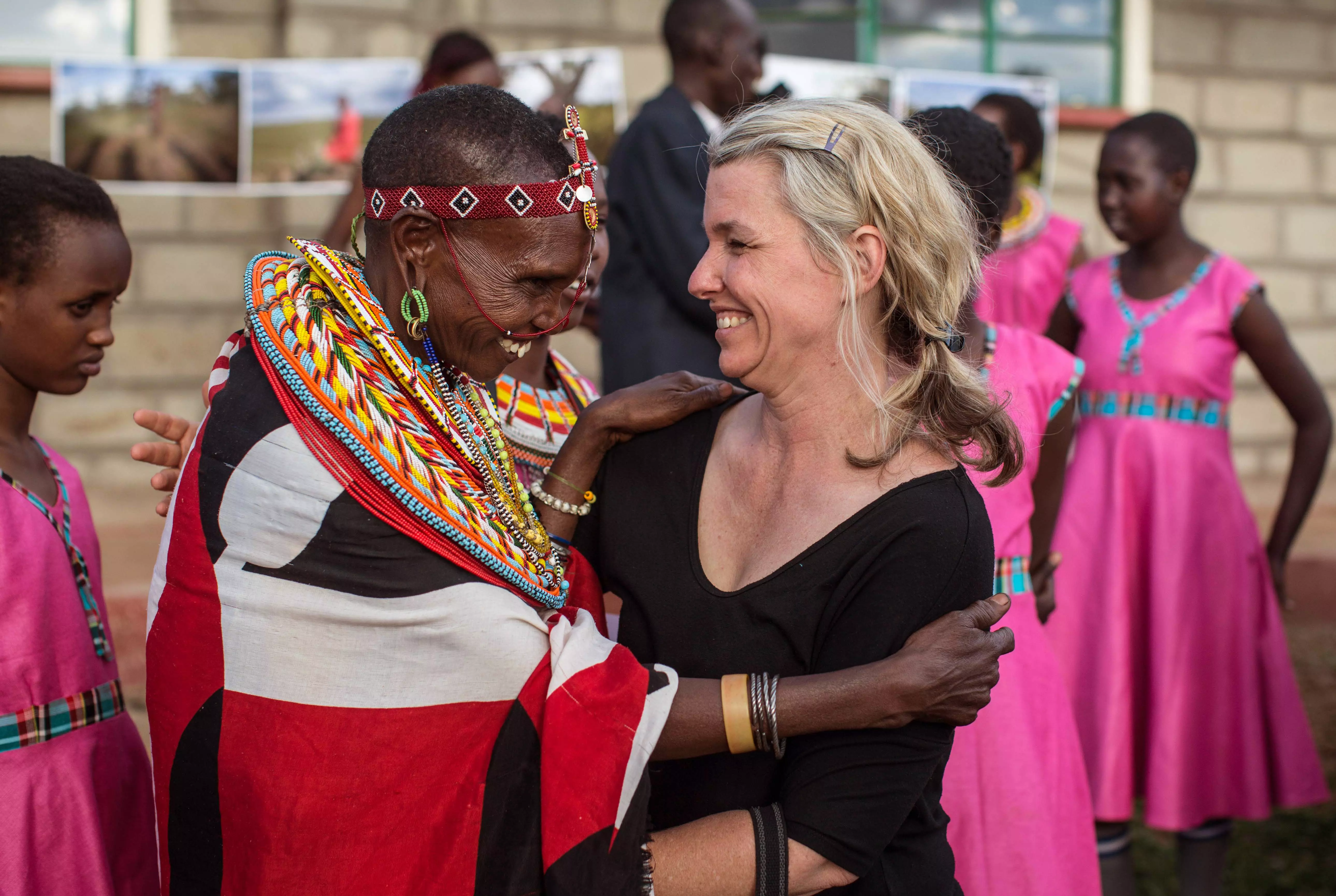
Above, the mother of a Tehani Workshop participant in Samburu County,
Kenya with TYTW Founder Stephanie Sinclair.
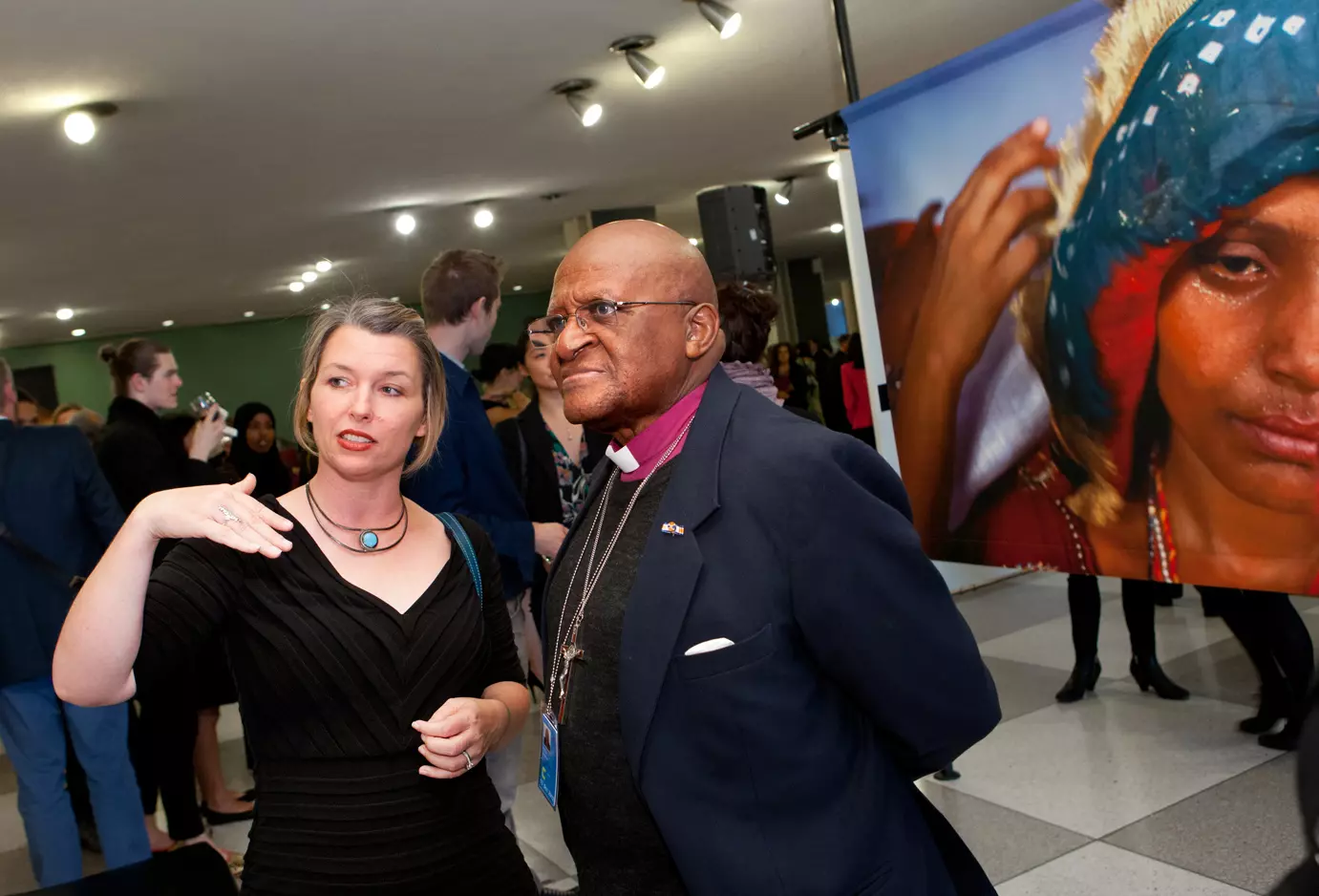

Above, Too Young to Wed Founder Stephanie Sinclair guides civil rights and humanitarian icon Archbishop Desmond Tutu through her seminal body of work on child marriage at the inaugural International Day of the Girl Child at the United Nations in New York.
Too Young to Wed began in Afghanistan.
In 2003, founder and Pulitzer Prize-winning photojournalist Stephanie Sinclair travelled to Herat to document girls and women who had set themselves on fire. In the burn ward, she discovered a disturbing pattern: many had been forced into marriage as children.
Their stories changed the direction of her work. Stephanie began documenting child marriage around the world, bringing the experiences of girls and women in places including Nepal, India, Tanzania, Ethiopia, Yemen, Afghanistan, and the United States to a global audience.
In 2011, her work was featured in a landmark National Geographic story on child marriage, and she joined global leaders and advocates at the Addis Ababa summit convened by The Elders that helped launch Girls Not Brides.
On October 11, 2012 — the first International Day of the Girl Child — Too Young to Wed launched its international advocacy campaign and travelling photo exhibition at the United Nations in New York. Surrounded by photographs of child brides, leaders and advocates called for an end to child marriage and for girls to have the education, protection and support to shape their own futures.
But raising awareness was never enough.
Over the next two years, Too Young to Wed built partnerships and developed ways to translate the stories and evidence gathered through its advocacy into direct support for girls and communities. In 2014, Too Young to Wed became an independent nonprofit, expanding from a photography and advocacy initiative into an organisation working directly with girls facing child marriage, violence and exploitation.
Today, Too Young to Wed works across multiple countries and contexts, from conflict-affected communities to places facing poverty, displacement and climate-related pressures. What began with one photographer listening to girls in a hospital in Afghanistan has grown into an organisation combining direct support, community partnerships, advocacy and storytelling — while keeping girls’ experiences and voices at the centre of its work.
TYTW is a secular organization that works with some of the most difficult-to-reach, vulnerable girls in the world.
We partner with grassroots organizations providing direct relief to their own communities, instead of parachuting in without an understanding of contextual realities.
In some field programming circumstances, faith-based community organizations may be best-equipped with staff capacity and resources to offer substantial support -- especially during humanitarian crises. Occasionally, TYTW will partner with such organizations referred to us by local experts in order to best support our beneficiaries. TYTW does not partner with faith-based groups adherent to religions practiced outside of the beneficiary community. TYTW remains fully secular with no religious affiliations or agenda, and no TYTW funds are used for any religious purposes.