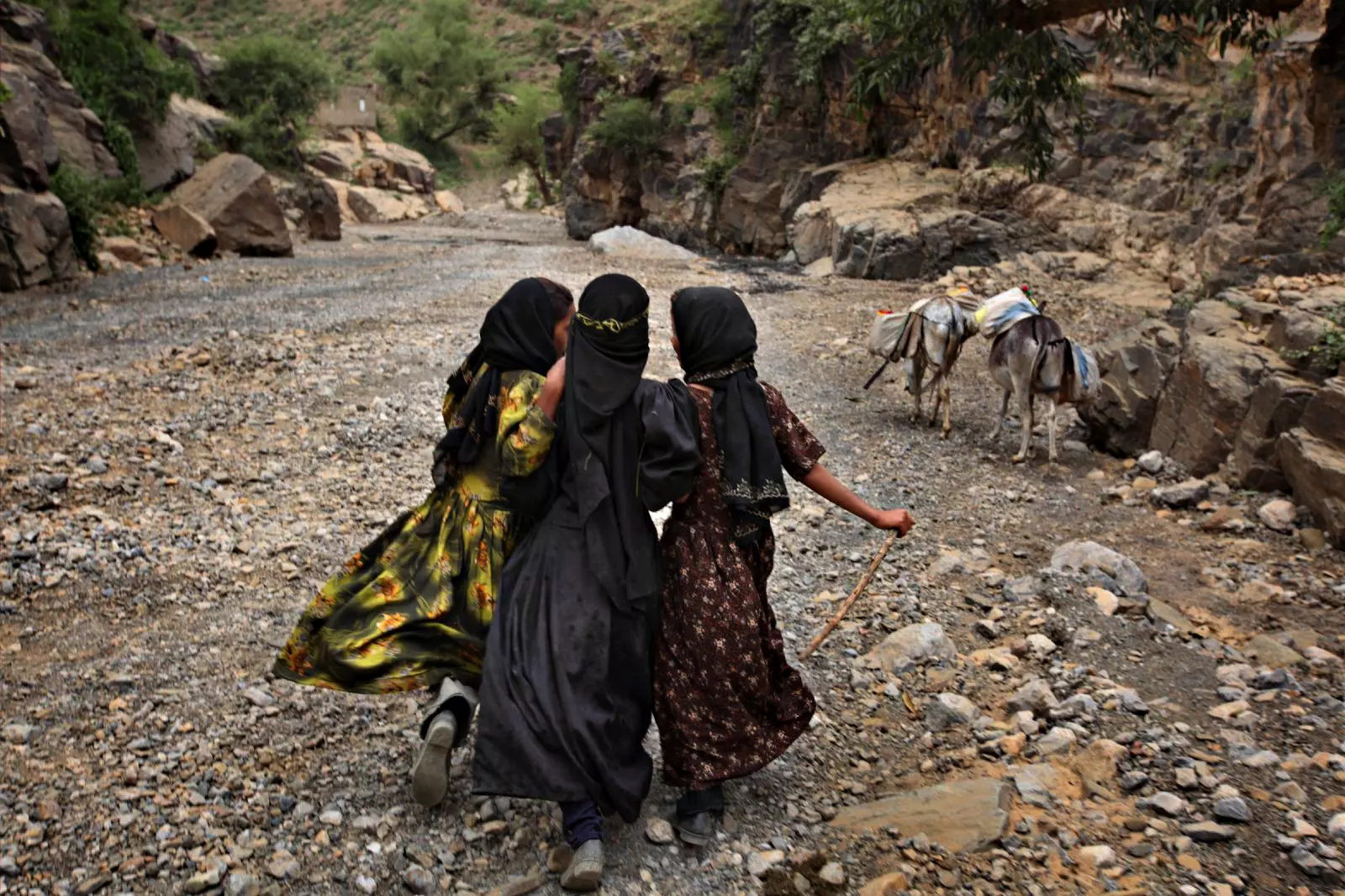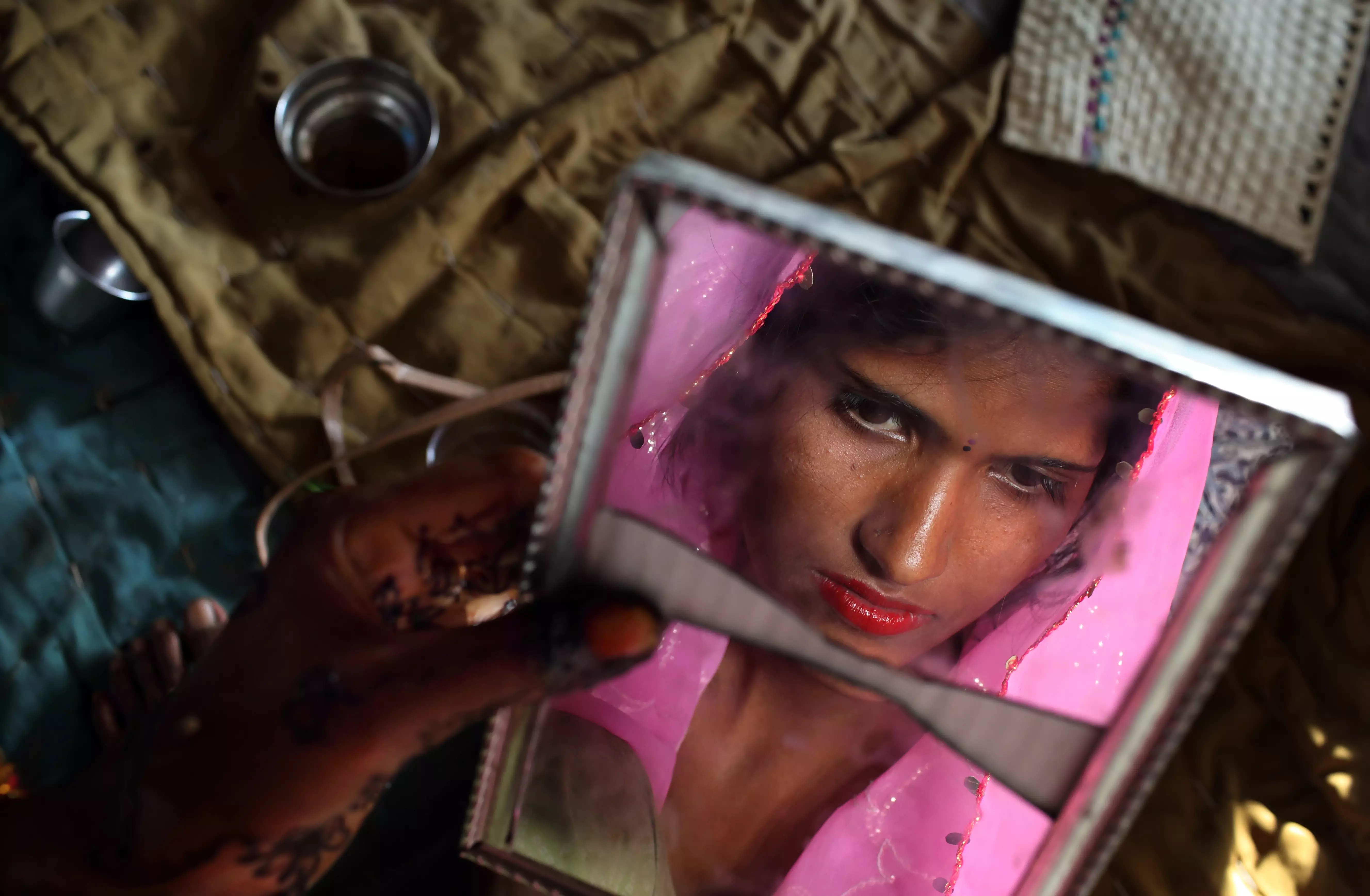
Above, 15-year-old Radha on her wedding day in Rajasthan, India.
Child marriage is a global problem. It affects both girls and boys, but girls are disproportionately affected. Each year, an estimated 12 million girls are married before the age of 18. Around 650 million women and girls alive today were married as children.
Child marriage takes away a fundamental choice: when and whom to marry. Its consequences can affect almost every part of a girl’s life: her education, health, safety, relationships, economic opportunities and ability to make decisions about her own future.
The impact does not stop with the girl. When girls’ opportunities are limited, families, communities and economies lose out too.
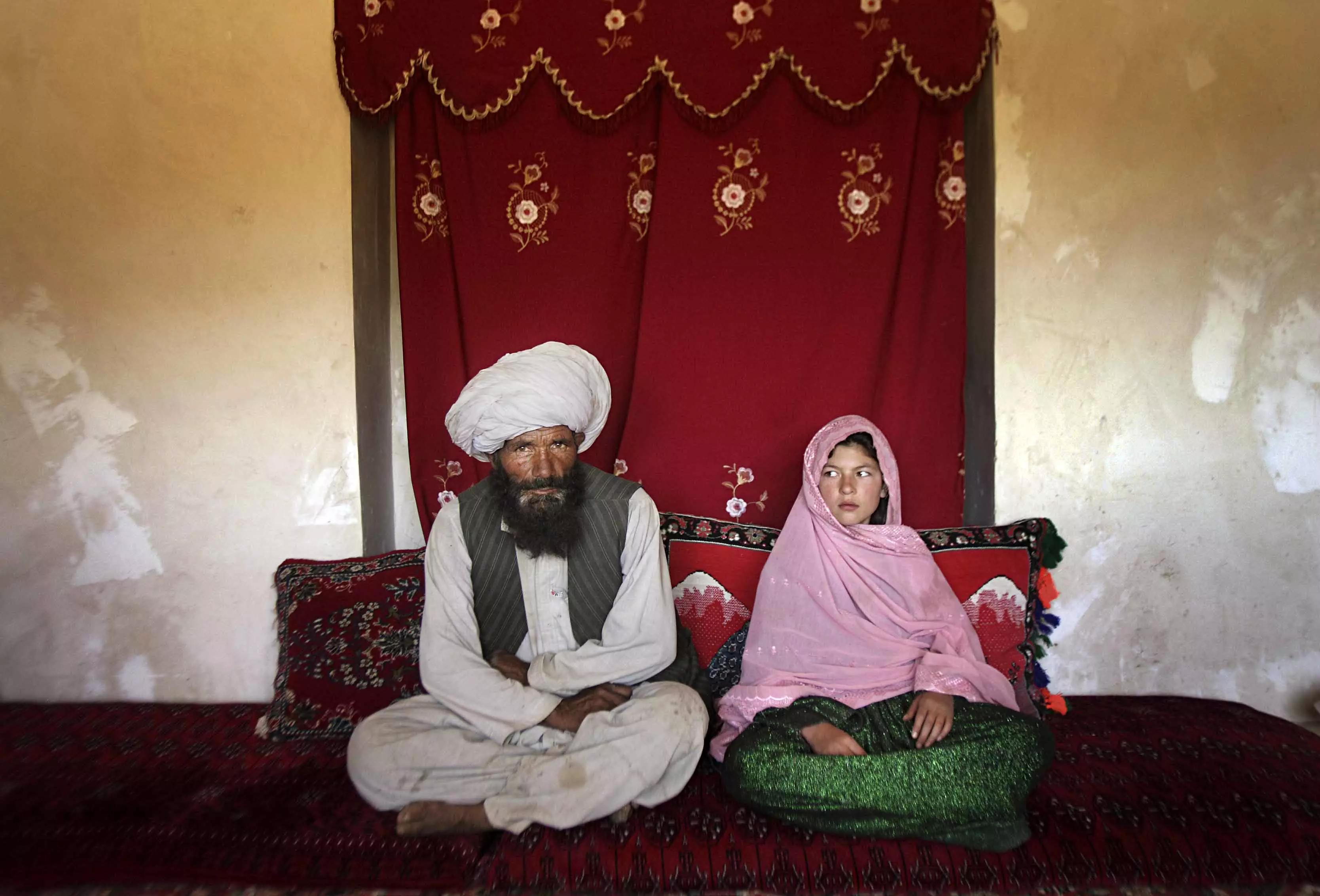

Above, Faiz, 40, and Ghulam, 11, sit for a portrait in her home prior to their wedding in Afghanistan.
There is no single cause of child marriage. Economic insecurity and a lack of viable alternatives are central factors. When families are struggling to meet basic needs, marriage may be seen as a way to reduce financial pressure or provide a daughter with greater economic security. In some contexts, girls are effectively sold into marriage, with families receiving money, goods or other economic benefits in return. For girls themselves, when secondary education is inaccessible or unaffordable and there are few realistic pathways into employment or further education, marriage may appear to be one of the few options available.
Gender inequality and social expectations can shape these choices. In many communities, girls and women have less power, fewer economic opportunities and less say in decisions about their own lives. Expectations about girls’ roles, sexuality and marriage can be deeply rooted in family and community life, making them difficult to challenge. In some contexts, families may also see marriage as a way to protect a girl from sexual violence, exploitation, pregnancy outside marriage or other perceived threats to her safety.
Conflict, displacement and climate change can make these circumstances more acute. Conflict and insecurity can disrupt education, healthcare, livelihoods and community support, while displacement can leave families with fewer resources and protections. Climate-related shocks including droughts, floods and food insecurity can deepen poverty, disrupt schooling and livelihoods, and further narrow the paths available to girls and their families. In these circumstances, child marriage can become a way of coping with crisis, reducing economic pressure or seeking greater security.
Child marriage is therefore not simply the result of an individual family’s decision. It is shaped by the circumstances in which girls and families live. When girls cannot access education, earn an income or see a realistic pathway to an independent future, marriage can become one of the few routes available to them.
The impact of child marriage can last a lifetime. Girls who marry as children are more likely to leave school and have fewer opportunities for further education, employment and economic independence. They may experience greater social isolation and have less say over decisions that affect their lives. These disadvantages can shape their prospects well into adulthood.
The sexual and reproductive health consequences can be devastating. Marriage often means early and sometimes repeated pregnancy, including for girls whose bodies are not yet physically mature and who may not be psychologically ready for sexual relationships, pregnancy or motherhood. Girls married as children may have little control over whether or when they have sex or become pregnant, particularly where they are married to older men. They are also at greater risk of physical and sexual intimate-partner violence and sexually transmitted infections, including HIV.
Early pregnancy and childbirth can carry serious and sometimes life-threatening complications. Younger adolescent girls are particularly vulnerable to complications such as obstructed labour and obstetric fistula, a devastating injury caused by prolonged obstructed labour without timely medical care.
The effects can continue into the next generation. Children born to adolescent mothers face increased risks of poor health and disadvantages in education and development, particularly where poverty and limited access to services are already present. Child marriage can therefore contribute to cycles of disadvantage that are difficult for families to break.
There are wider consequences for families, communities and economies. When girls leave school early, have children earlier and have fewer opportunities to participate in the economy, families lose income and communities lose skills and potential. Lower levels of girls’ education and women’s economic participation can reduce productivity and household incomes and constrain economic growth. Child marriage can also increase pressure on health, education and social services, while reinforcing inequalities across generations.
For girls living through conflict, displacement or other crises, these risks can be even greater. Disruption to education, healthcare and community support can increase vulnerability to child marriage while making it harder for girls who are already married to access the services and protection they need.
Child marriage does not simply change when a girl gets married. It can change the course of her entire life, and when girls’ opportunities are limited, families, communities and economies lose out too.