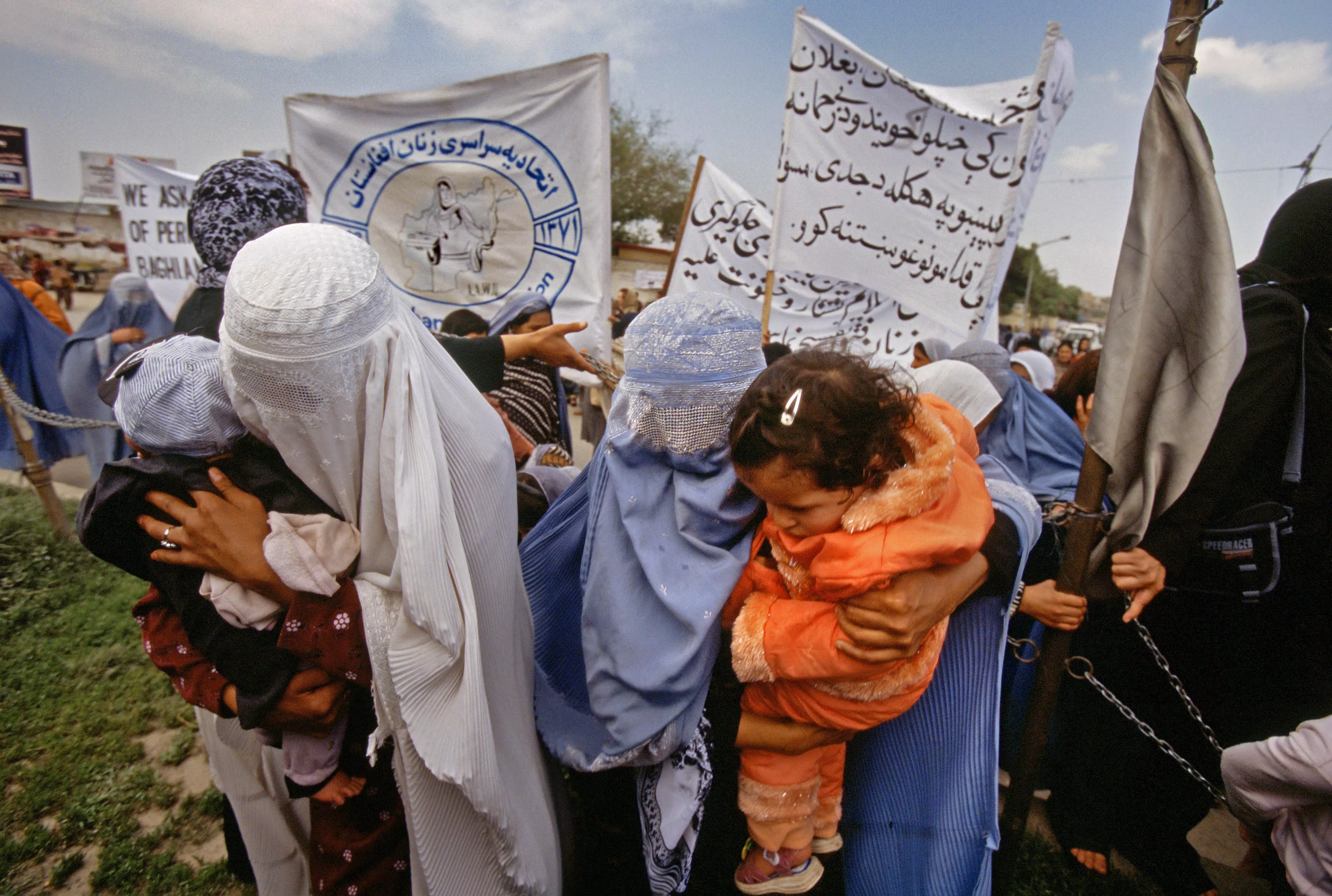
Women protesting the killing of three female Afghan aid workers in 2005. Photograph by Stephanie Sinclair.
Since the Taliban returned to power in August 2021, girls in Afghanistan have been shut out of secondary school. Women and girls have also faced sweeping restrictions on education, employment, movement and public life. At the same time, poverty, displacement, food insecurity and the loss of livelihoods have placed enormous pressure on families and increased the risk of child marriage for girls already living with fewer ways to shape their futures.
Too Young to Wed has continued working alongside Afghan girls and their families throughout this period. Our Afghan team helps families meet urgent needs, protects girls at risk of child marriage and violence, and finds ways for girls to keep learning despite the closure of secondary schools.
What began as an emergency response has become a sustained commitment to girls and families living through one of the world’s most difficult environments for women and girls.
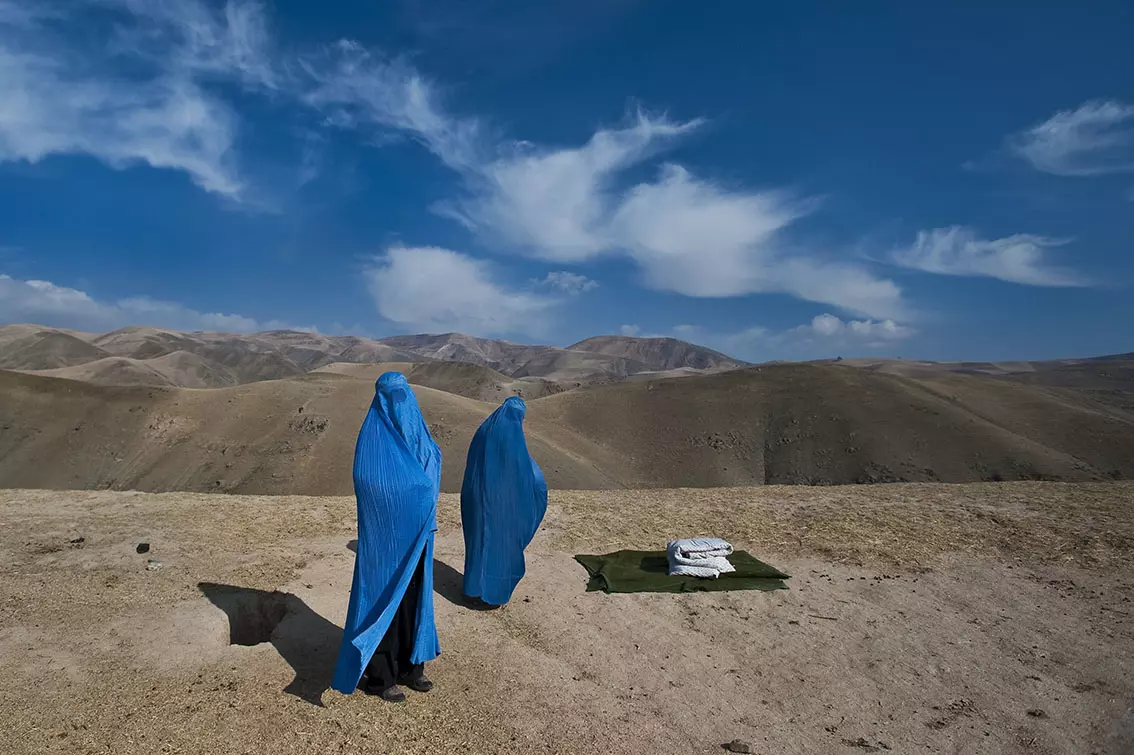

Noor Nisa, about 18, was pregnant; her water had just broken. Her husband, whose first wife had died during childbirth, was determined to get Noor Nisa to the hospital in Faizabad, a four-hour drive from their village in Badakhshan Province. Photograph by Lynsey Addario.
In Afghanistan, the closure of secondary schools for girls has happened alongside a devastating economic crisis. Families are struggling with poverty, displacement and the loss of livelihoods, while restrictions on women’s employment have made it even harder for many households to earn an income.
For some families, the pressure is extreme. When there is no money for food, healthcare or other basic needs, keeping a daughter safe from marriage can become an impossible burden.
TYTW’s Parwana programme supports families facing these circumstances across Herat, Badghis and Ghor. In 2025, we supported 540 families representing 3,703 people, including 1,297 girls. Particular attention is given to women-headed families who are facing the greatest risks.
Support can mean food and hygiene supplies, help with medical costs, school-related expenses, psychosocial support or help to rebuild a livelihood. When a girl is at serious risk, the team stays involved over time, keeping in regular contact with her and her family and providing support until she reaches 18.
The team also works to identify girls who may be at immediate risk of child marriage. In 2025, 670 families were surveyed to understand their circumstances, and 102 families representing 148 girls were referred to UNICEF Child Protection Clusters because of severe or immediate risk of child marriage. Twenty-five families received ongoing support, while 13 girls at the highest level of risk received individualised assistance.
The point is not simply to help a family through a difficult period. It is to help make sure that economic desperation does not determine a girl’s future.
Secondary schools have been closed to girls in Afghanistan since 2021. TYTW has found ways to keep girls learning anyway.
Our Afghan team works with female teachers and monitors to run small, discreet, community-based learning centres and clusters. In 2025, 2,552 girls across seven provinces continued their education through 40 learning clusters and centres, receiving 469,920 days of learning across 13 subjects. The curriculum is aligned with Afghanistan’s pre-Taliban national standards.
The model has had to adapt to the restrictions girls face. In Kabul, TYTW distributed 124 tablets preloaded with curriculum and video lessons that can be used without internet access. In Badakhshan, a six-week winter learning course achieved 90.57% retention, helping girls stay connected to their education during a period when access to learning can be especially difficult.
The classrooms are also places where girls can find support and connection. In 2025, 90 female teachers and monitors received training in trauma-informed care, while TYTW provided psychosocial support to girls affected by earthquakes and other crises. 1,302 dignity kits were distributed alongside menstrual health education.
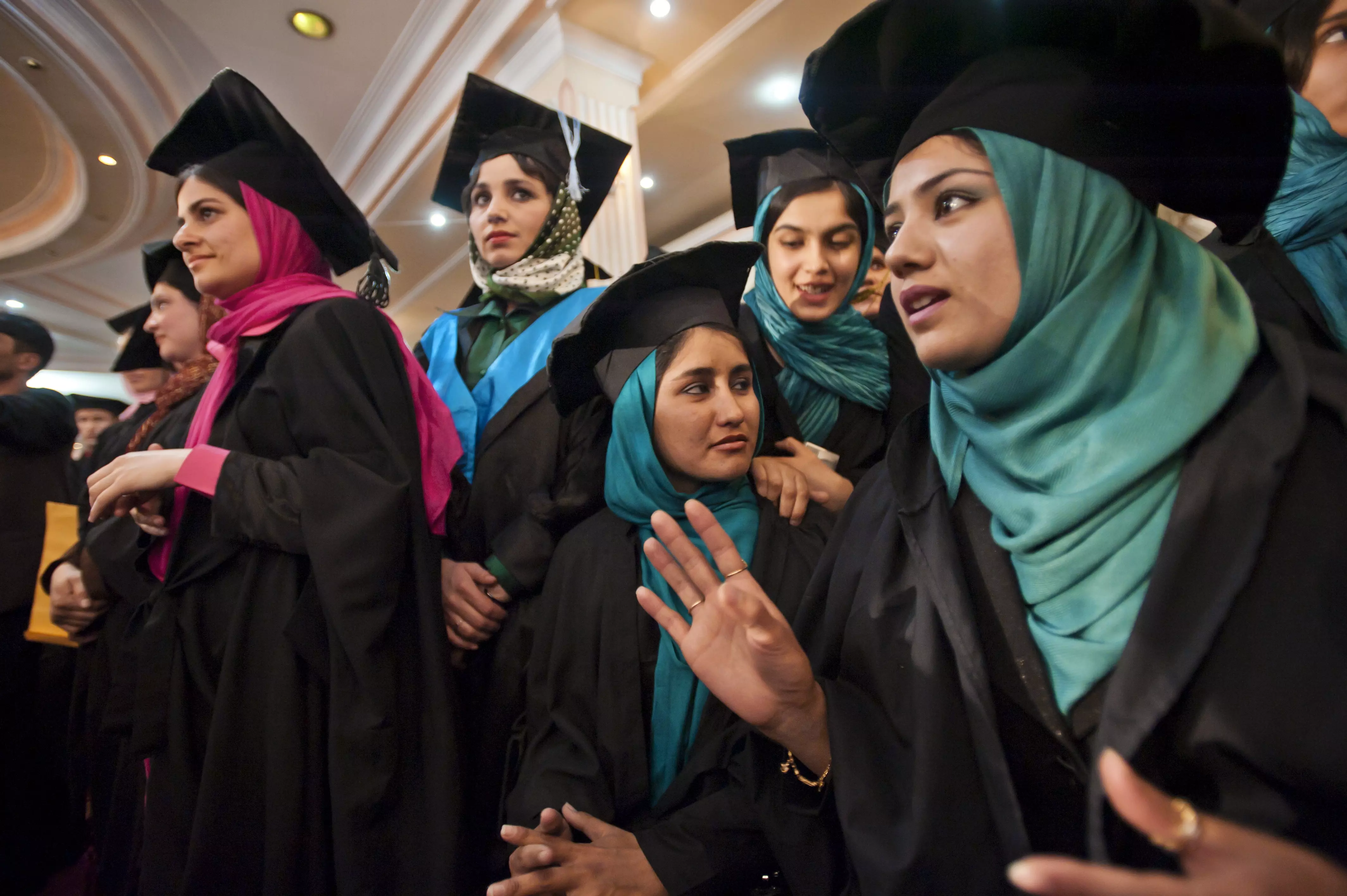
The restrictions imposed on women and girls in Afghanistan are often described in terms of policies and statistics. TYTW sees what those restrictions mean in people's lives.
Our Afghan team includes women with their own experience of child marriage, displacement and the loss of education and livelihoods. Their knowledge informs the work we do with girls and families and the stories and evidence we bring to the outside world.
In 2025, a member of the Afghanistan team testified before the UN Human Rights Council about her own experience of forced marriage, widowhood and the loss of her education and career after 2021. Her younger daughters were studying through TYTW’s discreet learning programme. Four months later, the Council voted to create an independent investigative mechanism for Afghanistan.
The work in Afghanistan is about more than keeping girls in school. It is about standing alongside girls and families as they face extraordinary pressure and helping protect their safety, their education and their ability to shape their futures.
Please note: Too Young to Wed does not provide evacuation or relocation assistance.